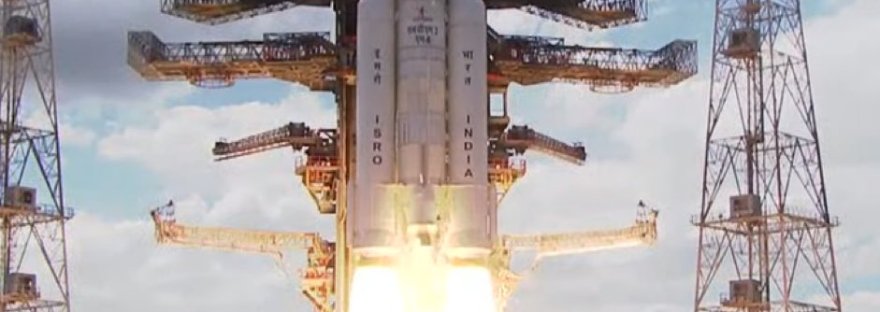
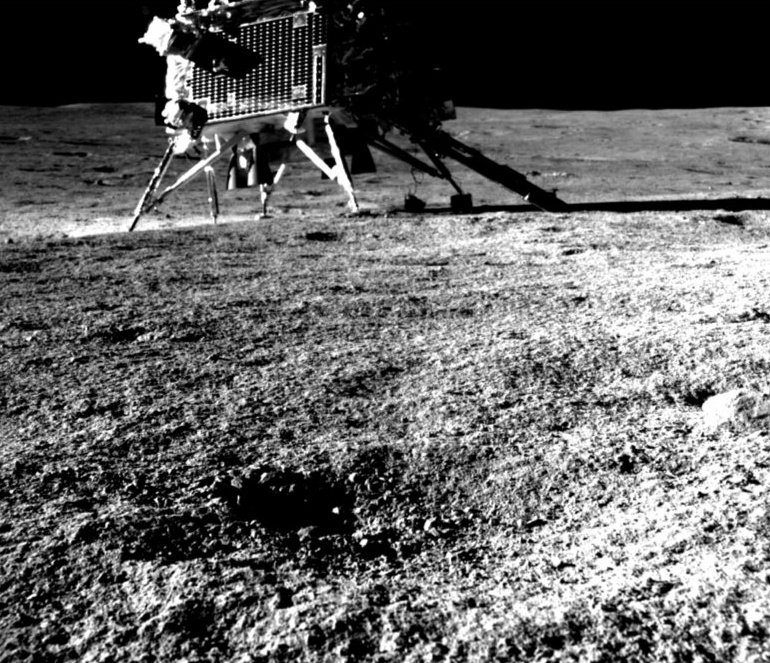
At 6:04 pm IST on August 23, 2023, the Vikram lander made a soft landing on the South Pole of the Moon. Announcing the success of Chandrayaan 3 and capturing the essence of this momentous occasion, Indian Space Research Organisation (ISRO) director S Somnath said, “India is on the Moon”. This sparked off celebration across the country.
In sporting parlance, India has captured pole position in this race to the South Pole after a short and impromptu race with Russia. This race to the finish line was to be a testament of prowess for both the nations at a crucial point in their history.
The two-way race became a one-sided cruise after the crash of Luna 25. With Russia bowing out of the race due to unfortunate circumstances, India was once again destined to be the first country to land on the dark side of the moon.
These lunar missions for both India and Russia come at important points in their nations’ history. India is embarking on a path to be a developed nation by the centenary of its Independence in 2047. The success of the lunar mission buttresses India’s growing geopolitical significance.
While Russia embattled in war with Ukraine for over a year looked to showcase that it is still a great geopolitical power. A successful moon landing would be a feather in Russia’s cap. The feat would underscore the scientific and technological prowess of a nation battered by economic sanctions.
As this minor gambit of geopolitics unfolded in an everchanging game of geopolitics, India’s latest moon mission – the Chandrayaan 3 is set to push the envelope on human understanding of Earth’s only natural satellite. The space race that kicked off with the discovery of water by Chandrayaan 1 is only set to intensify post the current moon mission.
The Chandrayaan 3 mission serves two purposes. One, the lunar mission is set to build on the discovery of water on the moon. The Indian Space Research Organisation (ISRO) is set to conduct experiments on hidden, dark side of the lunar surface. Second, the main objective of the mission is to complete the unfinished business of Chandrayaan 2.

The unfinished business being making a soft landing on the South Pole of the moon. India was supposed to make a soft landing on the moon in September 2019. However, the lander veered off course with just a mile left in its descent on to the lunar surface. India missed its date with glory by a hair’s breadth.
The entire nation collectively mourned the failure of Chandrayaan 2. The poignant images of former ISRO director, K Sivan breaking down in front of Prime Minister Narendra Modi on the crash landing of the lander and rover are deeply embedded into our collective memory.
New moments of jubilation and joy cherishing the success of Chandrayaan 3 have replaced those images of anguish from 2019. The Vikram lander and the Pragyan rover will build on the achievements of previous Chandrayaan missions.
As the PM Narendra Modi highlighted through his tweets, how the discovery of water and sub-surface by Chandrayaan 1 altered the thinking of the world about the Moon. And the success of Chandrayaan 2 Orbiter detected the presence of chromium, manganese and sodium on the lunar surface.
The discoveries made through the experiments conducted using the equipment on the Vikram lander and Pragyan rover will push us into uncharted territory. The rover will collect samples of the lunar surface and conduct a series of experiments to determine its chemical composition. The magnitude of these discoveries has the possibility to intensify the second space race.
Experts are already ecstatic over the possibilities over the future outcomes from this mission. Speaking to India Today, Dr Pramod Kale – former director of the Vikram Sarabhai Space Center has suggested India can make the use of the PSLV and technologies used for Chandrayaan 3 to land a rover on Mars.
Former group director of ISRO, Dr Suresh Naik had a different take. He opined the success of the soft landing on the moon has opened the door for India to send manned missions to the moon in the future. Successful manned missions could lead to setting up of a human colony on the moon to mine the precious minerals that are expected to be found on the lunar surface.
The Artemis lunar missions of NASA are working to make Dr Suresh Naik’s vision a reality. Also, energy researchers and experts are hopeful about harnessing Helium-3 present in the lunar atmosphere to fuel clean nuclear energy.
The findings of Chandrayaan 3 might present new insights and offer timelines for these futuristic scientific objectives. As the celebrations continue and congratulation pour in, ISRO has announced its next space mission Aditya L-1 to study the solar atmosphere. This ambition and determination of ISRO to succeed has led to a new dawn for the Indian space sector.
Discover more from The Critilizers
Subscribe to get the latest posts sent to your email.

 The Critilizers