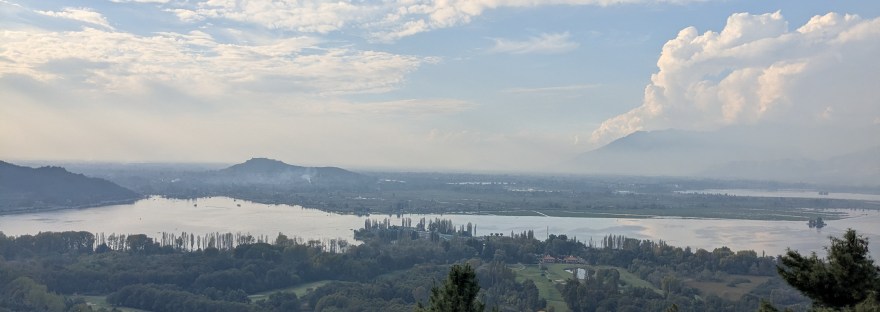
 Sekhar: Here is your Khawa . They are selling at that counter thought you may like it
 Shaila Bano: (sips and tells) very bad do they even know how to make it, ask them to come to Kashmir and taste once by the by I prefer noon chai than Khawa and I miss my place and these things are making me miss more
Sekhar : Again started , Who drinks a namkeen tea and it is okay not that hyped first you can enjoy what you have right, any how we are at airport and it is a matter of time we reach there. you will be visiting every now and then and you still feel home sick as if you are visiting after ages.
ShailaBano: Shut up, I will miss what is your problem and do I need permission for praising my home town.
Sekhar : okay I will get you that announcement speaker, you can start praising about your home town .
ShailaBano: If you mock me, I am not going to tell you any thing about Kashmir from now on.
Sekhar: okay I am sorry, lastly you mentioned about lot of things last time about insurgency and many other things, But tell me is it that formation of all these organizations is post 1980 after the withdrawal of USSR from Afghanistan arena. And what is the political implications of formation of these organizations.
ShailaBano: Okay I will make things very simple and clear for you . let me make you understand how the things actually work. I had mentioned you about jamat-e-islami earlier right. Now I will walk you through about it at as an organization from foundation. then many more things will be clear to you.
Sekhar : Keep it simple, In the showcasing of you knowledge please do not complicate.
ShailaBano: Please Shut up and listen. The reason I chose this organization is , this will help you in understanding political dynamics. first thing in India as I already mentioned it is operating as Jamat-e-Islami hind and Kashmir branch is controversial in nature and has been separated and banned .
Sekhar: Yes you said and but what else new you want to add.

ShailaBano: Let me take you the founder and foundations of it . The founder is Syed Abul Ala Maududi and founded Jamat-e- islami in 1941. He was born in Aurangabad 25th Sep 1903. He was not into purist Islam and has even worked with congress in the initial days when he was very young. He was related to Syed Ahmad Khan(Founder of Aligarh Movement) from the maternal side. He has also spent time in Hyderabad as well where he worked under Nizams as well where he did some of his important works and his years in Hyderabad was the period where his world views are changed as well.
Sekhar : Okay clarify me things to understand things should I need to know his biography as well.

ShailaBano: You need to know his ideology though. Because that had shaped many things eventually . As he worked under Nizams his ideology changed in the support of strong Muslim rule and support of aristocracy rather than supporting democracy . He started identifying himself with the aristocratic class. There he started writing Tarjuman-ul-Quran ( Translation of Quran). His Understanding of theology got a originalist shift .
ShailaBano: Dude There? you are not following what I said right ?
Sekhar : Can you please simplify and explain me clearly.
ShailaBano: He started to believe that Islamic rule is necessary for the well being of both Muslims and Non Muslims. He started believing Socialism, Democratic Socialism and Communism principles are not inclined with Islamic credentials and they should not be encouraged. Only Islamic Khalifate rule(like Rashidun Khalifate) would be suitable for over all well being. Let me present you a event here Turkey Under Mustafa Kemal Pasha was undergoing reforms and he gave up Caliphate and focused on building democratic Institutions and development . This might also be one of the reason for him for believing these institutions are anti Islamic.
Sekhar : Okay now I get it , He developed extremist ideology and started to believe if efficient democratic institutions were built they might effect Islamic principles. So in a way he started to believe Islam would be in danger so movements and protests.
ShailaBano: Exactly, and he started the organization Jamat-e Islami after the announcement of demand for the Pakistan in Lahore(Lahore Session 1940). He is in favor of separate Islamic state . In between in 1938 he shifted to Northwest India to a village in Pathankot to over sea activities of Waqf called Daru-i-islam. In addition to that he did not like the idea of being present in the region ruled by British government and had spent some time in Afghanistan. Jamat-e-islami after partition got separated into India and Pakistani wings. Post partition he started leading Jamat-e-Islami Pakistani branch and the Kashmiri branch due to its controversial nature got separated.
Sekhar: Does it have a wider base of public support or just a organization with simple support.
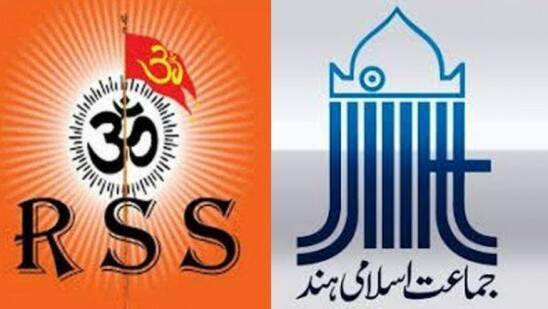
ShailaBano: Initially it started with 75 members and eventually it has grown into a big organization with very huge support. few scholars place it similar to RSS wing(In his book Islam in Indian Politics Shakir portrays ideological proximity with RSS, Even most recently Kerala CM also made such remarks which are little controversial in Nature). Moin Shakir in his book Secularisation of Muslim behaviour(1973) criticised Jamat for championing the cause of closed system in the garb of Islam. It is about sustaining the Islamic sentiments and narratives among the public especially in Kashmir region. In Kashmir region it was widely misused for boycotting elections, nurturing separatist tendencies in the name of purist Islam and also creating and maintaining the narrative that Islam is in danger if integrated with main land.
Sekhar: Equating with RSS , but is it a suitable Comparison.
ShailaBano: In few ways it is not a suitable comparison as RSS promotes hyper nationalism and Hindutva ideology and there is a spectrum of ideologies in Hindutva as well ranging from extreme to moderate. Jamat-e -Islami hind as well on the other hand is about promotion of Islamic state and Sharia initially and eventually Jamat-e-Islami Hind faction has changed its stance for the promotion of Islamic interests. It also has a spectrum of ideologies and for most of the time it is not in support of elections. Later on changed its stance to contest in the elections and as said earlier Kashmir faction has its exceptions and been controversial.
Sekhar: I have a question here , what activities as an organization is it involved ? as you said it is not in support of elections so how would be it relations with people contesting elections and if not in political sphere what does it do.
ShailaBano: In initial stages of formation it was working towards promotion of Islamic philosophy and importance of having Sharia based law. Post bifurcation Jamat- e- Islami hind eventually changed its ideology and started to accept elections. It started to support candidates who it felt are in support of its ideology. As it started to support candidates a little political flavor would be automatically added to it. Eventually there would be a lobby by Muslim political parties and candidates. It has its own publications , journals on Quran, Hadiths, Sharia and other spiritual books and has its own network. Its books are renowned among the community as well. It also has its own stand on the key issues and tries to spread that and bring the entire community on a single stance.
Sekhar : Ah… now it is clear why Jamat-e -Islam Kashmir is controversial in nature. Is it like the Jamat-e-Islami Kashmir has not yet completely shed the ideology of its founder Syed Abul Ala Maududi. Am I correct ?
ShailaBano: Not only that it did not completely shed the ideology of its founder, Pakistan also tried to held its influence over the Kashmir part of the organization and tried to nurture and spread the separatist ideology, in the name of religion. In a way Pakistan through Jamat tried to sustain a narrative among the public that Islam is in danger. One more evidence to show why Jamat-e-Islami is against socialist or communist faction is when USSR entered Afghanistan arena, USA with the support of Pakistan tried to strengthen a narrative that as communist USSR is an atheist government and if it was allowed to have a sphere of influence it would be dangerous to Islamic institutions. As Jamat is not pro socialist or communist governments form beginning, it has become easy for Pakistan to use this sentiment in both Afghanistan and Kashmir. Post Afghan issue completely diverted the resources into Kashmir arena.
Sekhar: Post Afghan issue in the sense it is end of 80’s and by the beginning of 90’s and it is also the time when Kashmiri Pandit issue happened right? and I hear now and then that in 1990’s Kashmir region has suffered with radicalization and militancy. I heard that it was during this period there was growth of terror organizations and it is common to find militant sympathizers in the region.
ShailaBano: Till early 1980’s Kashmir, especially Srinagar is known for its cosmopolitan nature and welcoming nature. Kashmiris are known for their intellect,, plain heart and people who respect academics .If you remember it used to be a shooting spot for many Bollywood films, especially many Amitab Bachan Films like Kabhi Kabhi , Silsila etc. Even previous generation people have lot of nostalgic memories of that time in Kashmir.
Sekhar : you mean to say with the entry of radicalization, Kashmir lost its cosmopolitan nature right?
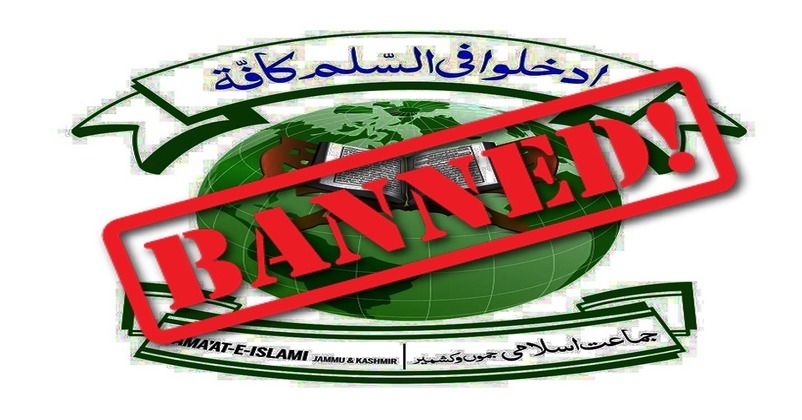
ShailaBano: Yes , Jamat’s Kashmiri faction was used for propagation of purist Islam. You see the advent of moral policing of women in the name of religion. Equating it with the RSS may not be appropriate; a more fitting comparison—particularly for the Kashmir branch and not the Jamaat-e-Islami Hind—would be with fringe Hindutva groups known for public moral policing, such as those that appear in parks during Valentine’s Day.. Earlier it was very common to see Kashmiri women in modern comfortable dressing(with communities respecting their traditions) and there was no heavy stress on the appearance. All these changed eventually. To be very honest the Muslim communities out side Kashmir like UP, Hyderabad ,Kerala and Pockets of Andhra are far more conservative and orthodox than people of Kashmir. The only common thing in Kashmir and UP the Muslim society is caste based . In Kashmir Syed community(Peer/Ashrafi) had good relations with Brahmins and that fabric too was disturbed and sense of insecurity has developed among public.
Sekhar: Now I get it , At least Kashmiris have a reason for being dragged into radicalization as they are in the middle of several geopolitical issues and being in the direct effect of issues, the community in the rest of the mainland also witnessed radicalization in many instances. Many of it might be political or what ever reasons and the issues of Babri masjid and others might have added fuel and also been taken advantage by adversaries.

ShailaBano: Yes and there started even the growth of terror organizations like Indian Mujahidin, Jash-e-Mohamad and many other etc and every organization worked at different levels and now with changed names like resistance front etc. Their organizational structure, ideology and operations can be discussed some other time.
Sekhar: Jamat-e-Islami as a organization does not actively involve in politics, It does religious work like Islamic educations ,strengthening of Islamic institutions etc but many a times it is used for narrative building especially in Kashmir and in diverting Kashmiris, and Jash-mohamad, Indian Mujaheddin etc are terror organizations. is my understanding right?
ShailaBano: In simple terms yes and will give you details on terror organizations later and why the name Indian Mujaheddin and all can be discussed. But let me clarify you one thing here, there is concept called political Islam, this is the ideology is used for radicalization and extremism.
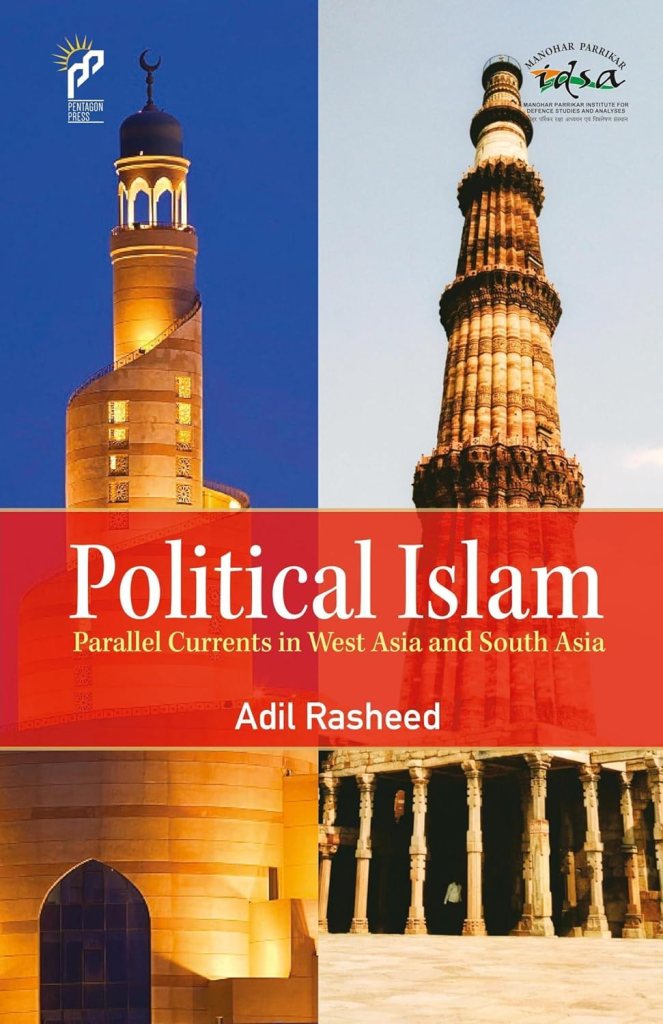
Sekhar: Political Islam? What exactly does that mean?
Shaila Bano: What I mean is this — the spiritual aspect of Islam (the spirituality of the Qur’an, the relationship with God) has nothing to do with extremism. In Islam, there isn’t a strict separation between a spiritual and a political head — the Khalifa is considered a common head (unlike Christianity, where the Pope and the King were separate).
Traditionally, these leaders were expected to maintain the sanctity of spirituality without mixing it with political ambition. But many terror groupings, driven by political motives, use the name of religion to justify violent acts.
Sekhar: Now I get it — that’s why the nature of Jamaat also feels confusing. It performs religious functions, but at the same time makes political demands — like boycotting elections or campaigning for an Islamic state.
In trying to do both, it seems to have forgotten the spiritual sanctity, and the terror outfits went even further — making people completely forget spirituality itself, or insaniyat (humanity).
Even the example of Syed Abul Ala Maududi fits here. Once he started believing that Islam would be in danger if modern democracy took center stage, he opposed it and propagated the idea of an Islamic state. If you really analyze it, there’s very little spirituality attached to that thought.
Shaila Bano: That’s actually a very good way to summarise it.
Alright, let’s discuss the rest later — it’s time for our flight. Come on, let’s move.
Discover more from The Critilizers
Subscribe to get the latest posts sent to your email.

 The Critilizers