
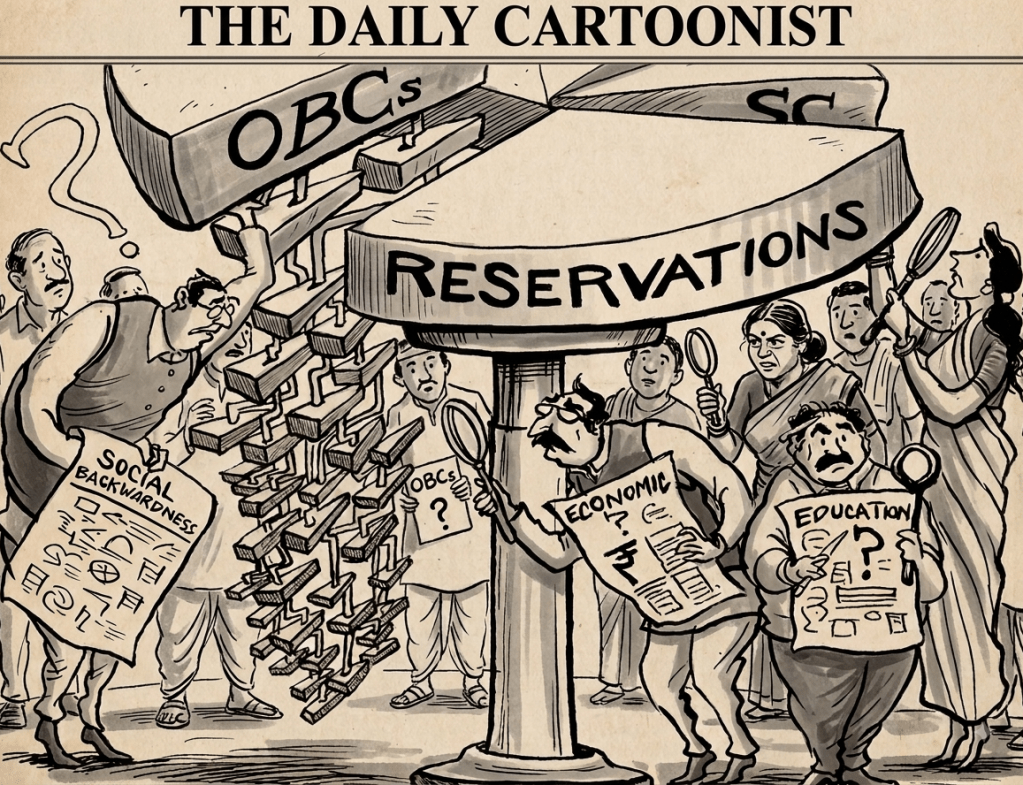
 Mona: Hey Teja! OMG, you’re chilling here listening to songs while I’m sitting here all tense and nervous. You have to help me.
 Teja: Oh… hi! Long time no see. Although, honestly, I wish I hadn’t seen you. Even the Tamil Nadu elections are over—why are you still anxious and nervous?
Mona: You have to help me! I have to attend an event where the organizer called me and asked me to speak about reservations because it’s currently in the news. You know me, right? Please prepare me so that I don’t say something stupid and end up looking like a fool.
Teja: I don’t know why, but somehow, even when you don’t say anything, you still manage to look like a fool to me.
Mona: Shut up! Please stop mocking me and just tell me what I’m supposed to speak about.
Teja: Alright. So, you’ve been asked to talk about affirmative action. Interesting—and definitely a burning topic.
Mona: No, not affirmative action. They specifically asked me to speak about reservations.
Teja: OMG, it’s more or less the same! Better start preparing, because otherwise there’s a very high chance you’ll become a meme template.
Mona: That’s exactly why I came to you, idiot! Instead of making fun of me, if you could actually explain it, that would be helpful.
Teja: Fine. Affirmative action refers to policies adopted by governments or institutions to provide special opportunities and support to socially and economically disadvantaged groups, with the aim of promoting equality and social justice.
In India, reservation is one such affirmative-action policy. Scholarships, free hostels, and coaching programmes are some other examples of affirmative-action measures.
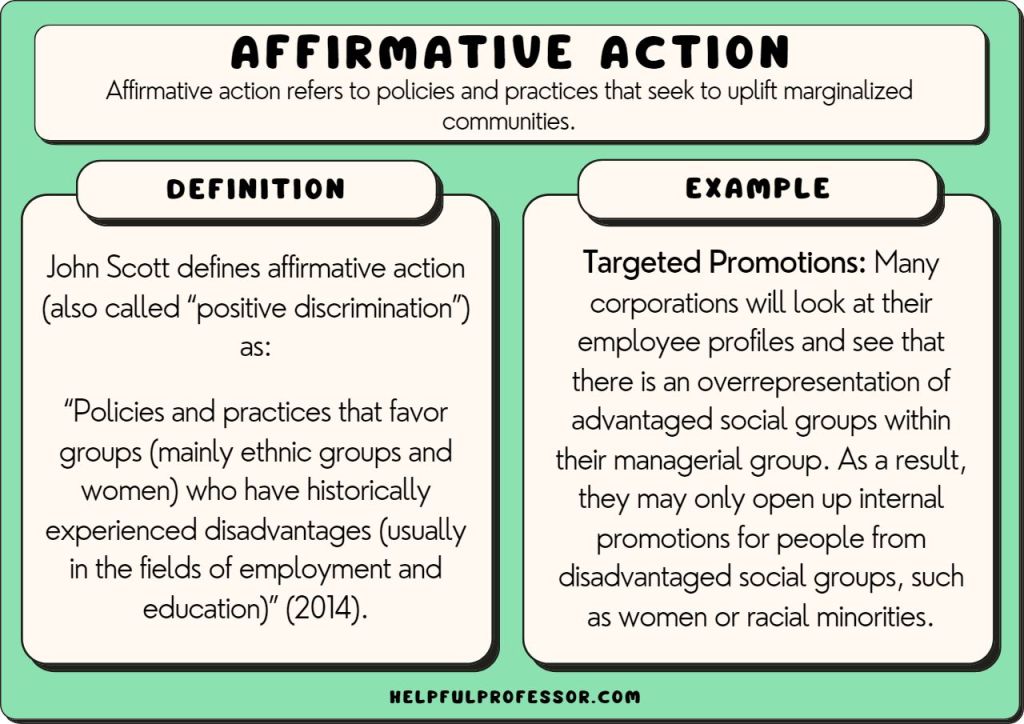
Mona: Okay, got it. So affirmative action isn’t an India-specific concept. The Indian version of affirmative action is reservation?
Teja: Exactly. To be more specific, the term affirmative action is closely associated with the United States, particularly with the Civil Rights Movement. The American policy framework generally uses the term for measures aimed at ensuring opportunities, particularly employment, without discrimination.
Mona: So what is the Indian version, then? Who does it apply to? And what’s the story behind it? I want the whole thing—end to end.
Teja: In India, reservation was developed as a means of providing opportunities to socially and educationally backward sections. But the idea isn’t simply about upliftment. It is also connected to protection against discrimination and ensuring representation and access to rights.
Mona: Okay, but who exactly are these marginalized sections? And how are they identified?
Teja: Let’s take it step by step. Initially, reservation primarily focused on Scheduled Castes and Scheduled Tribes.
Before we get into constitutional provisions and legal debates, let’s first understand who they are.
Scheduled Castes
Teja: Scheduled Castes are communities historically subjected to social discrimination and untouchability. Many were forced to live outside village boundaries and were denied access to education, public resources, and places of worship.
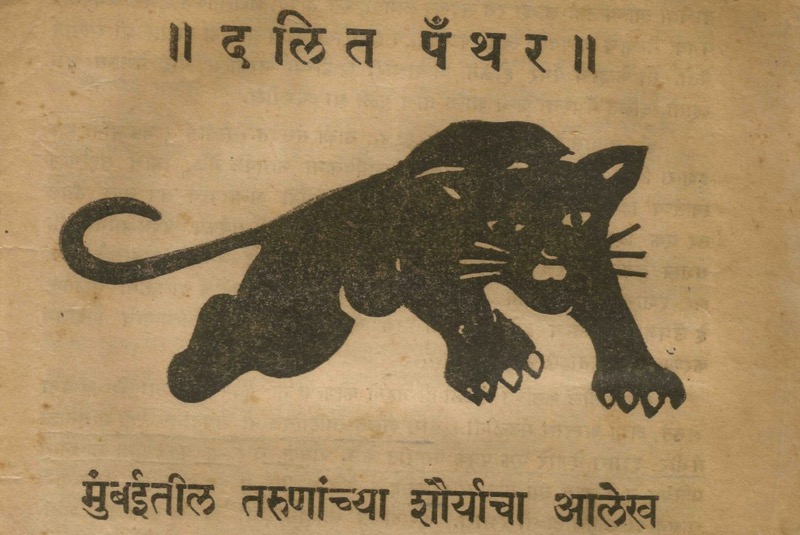
The term Dalit, meaning oppressed, is commonly used as a term of self-identification. Its early usage is associated with Jyotirao Phule, it was popularized by Dr. B.R. Ambedkar, and it gained further modern prominence through movements such as the Dalit Panthers in 1972.
There are also interpretations among some Dalit and Dravidian scholars that connect Dravidian communities, Scheduled Castes and Scheduled Tribes with indigenous populations, while viewing the upper three varnas—Brahmins, Kshatriyas and Vaishyas, often referred to as Savarnas—as migrants associated with the Aryan Migration/Invasion Theory.
According to this interpretation, the development of the Vedic social order contributed to discrimination and exclusion from education and temples.
Mona: OMG! Discriminating against people like that is terrible. I’ll always stand with the people—that’s why I’m in politics! I’ll raise my voice!
Teja: Your voice at that pitch is terrible, so please don’t raise it!
I understand you’re moved by the idea of discrimination, but that’s not the point here. We’re trying to understand the debates surrounding affirmative action. That’s why I’m not getting into all the larger caste debates right now.
Mona: Fine! Then who are the Scheduled Tribes?
Scheduled Tribes
Teja: Scheduled Tribes are generally associated with communities that historically lived in geographically isolated regions—hills, dense forests, mountains, islands and other remote areas—with distinctive cultures, languages, customs and customary laws.
Scholars and historians have also associated some ancient Naga cultures with these communities and considered them part of the indigenous population of the country.Scholars and historians have also associated some ancient Naga cultures with these communities and considered them part of the indigenous population of the country.
Mona: Okay, now I understand the basic distinction. Historical injustice became an important criterion, and caste therefore became one of the bases for reservation in India.
But how did these communities actually become officially identified?
How did Scheduled Castes get identified?
Teja: Initially, there wasn’t an official list of the Depressed Classes.
Even before the colonial census system, communities facing untouchability, residential segregation, separate wells and denial of education were known socially—but they weren’t systematically recorded as one official category.
Then colonial census operations began in 1871. The census started recording things such as caste names, occupation, religion, literacy and population distribution.
Mona: So basically, the British started putting all this social information into records?
Teja: Exactly. And later, Herbert Risley conducted an influential census that attempted a detailed classification of castes based on social precedence.

By the 1920s, the British Government was identifying communities affected by untouchability using several sources—census data, provincial government reports, District Collectors’ reports, recommendations from local administrators, community organizations and other sources.
The Simon Commission also recognized that certain communities required additional political safeguards and noted that some communities lacked adequate political representation.
Mona: And that’s where Ambedkar enters?
Teja: Exactly.

Dr. B.R. Ambedkar raised the issue of political representation during the Round Table Conferences and demanded separate electorates for the Depressed Classes. This became part of the wider controversy surrounding the Communal Award.
Gandhi opposed separate electorates for the Depressed Classes. Eventually, the disagreement resulted in the Poona Pact of 1932, which provided for reserved seats in legislatures at the central and provincial levels.
Gandhi firmly believed that Scheduled Castes were part of the larger Hindu fold and used the term Harijan for them.

Eventually, the Government of India (Scheduled Castes) Order, 1936 prepared a formal list of communities. They were called “Scheduled” because the list appeared in a schedule attached to the legal order.

After Independence, the Constitution (Scheduled Castes) Order, 1950 largely built upon this earlier list, with revisions made when necessary.
And what did the Constitution provide?
Mona: Okay, that gives me the history. But what did the Constitution actually provide?
Teja: I’m not going into every provision now. Each one has its own history and debate, so we’ll save those for later.
For now, remember the broad picture:
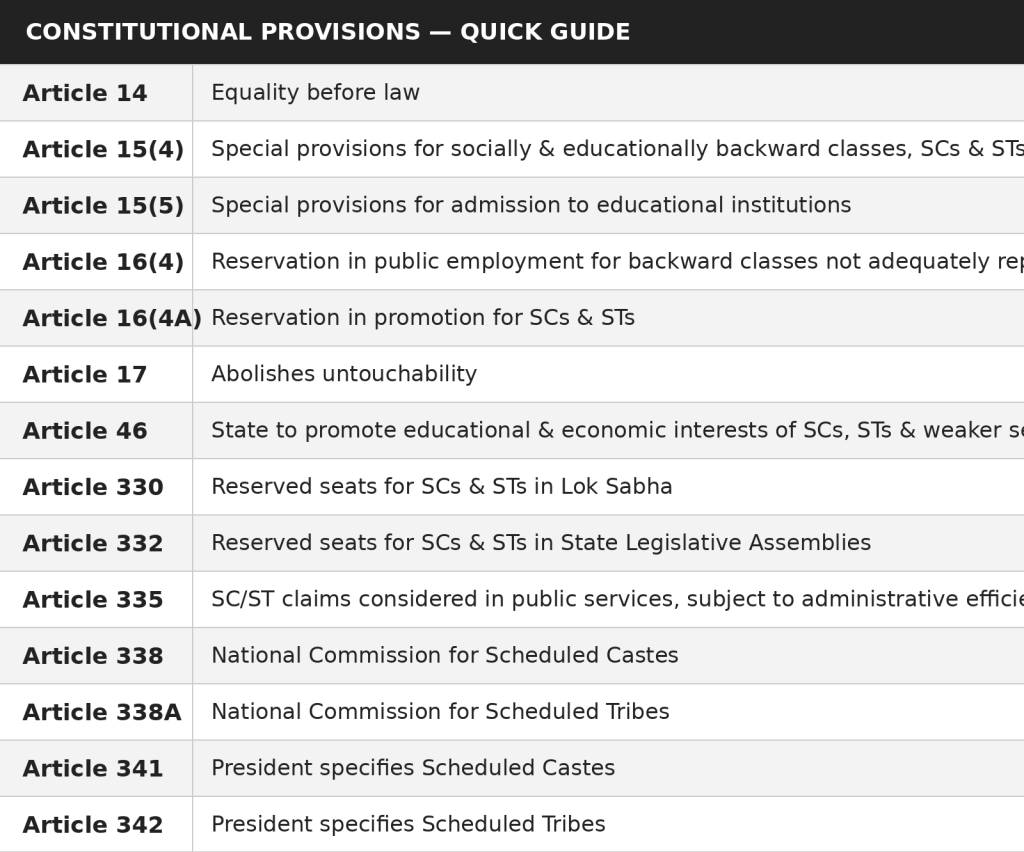
Mona: So, in a way, it started with the demand for political representation and protection from discrimination. But eventually, representation expanded beyond Parliament and Assemblies into education and public employment.
Teja: Exactly. Eventually, the demand for representation started appearing in almost every field.
I’m not going into the politics of affirmative action right now anyway.
To put it simply, Ambedkar viewed reservation as a means towards social, economic and political equality, ultimately contributing to social justice.
He also respected meritocracy. Even Article 335 talks about considering the claims of SCs and STs in public services while maintaining administrative efficiency.
Mona: Okay, but what about the Scheduled Tribes? You gave me the basic definition, but what is their historical story?
Scheduled Tribes: The other side of the story
Teja: As I mentioned, these communities generally lived in geographical isolation and had distinctive customs, languages and customary laws.
The colonial government often found these regions difficult to administer. There were also several tribal revolts against colonial rule, including the Santhal Rebellion, Munda Revolt and Kol Uprising.
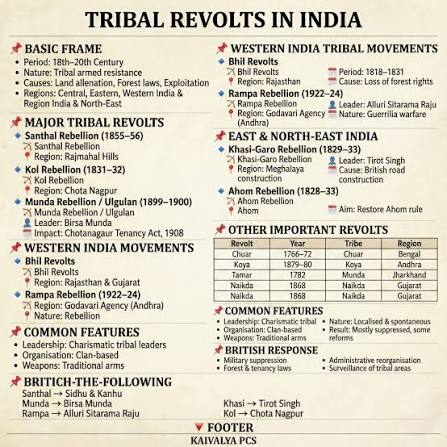
Colonial census operations, along with the work of anthropologists such as Verrier Elwin, recorded information about tribal communities—their names, languages, occupations, religions and other characteristics.
The British also created special administrative arrangements, such as the Scheduled Districts Act of 1874, to govern some of these regions.
The Government of India Act, 1935 did not create a formal Scheduled Tribe list, but it recognized Excluded and Partially Excluded Areas.
After Independence, the Constitution (Scheduled Tribes) Order, 1950 officially identified the communities recognized as Scheduled Tribes in each State and Union Territory.
Mona: Okay, so SC and ST have their own historical background and constitutional framework. What about OBCs?
Enter the OBCs
Teja: Now we enter what is often called the post-Mandal era. In a way, OBC politics is sometimes described as the modern avatar of caste politics.
The early demands for recognition of backward communities can be traced back to around 1902 in the princely state of Kolhapur. At the same time, movements such as the Self-Respect Movement were developing in the South.
By the early 1950s, states such as Tamil Nadu were already trying to identify communities considered socially and educationally backward.
The constitutional framework for OBC-related affirmative action primarily comes through provisions such as Articles 15 and 16.
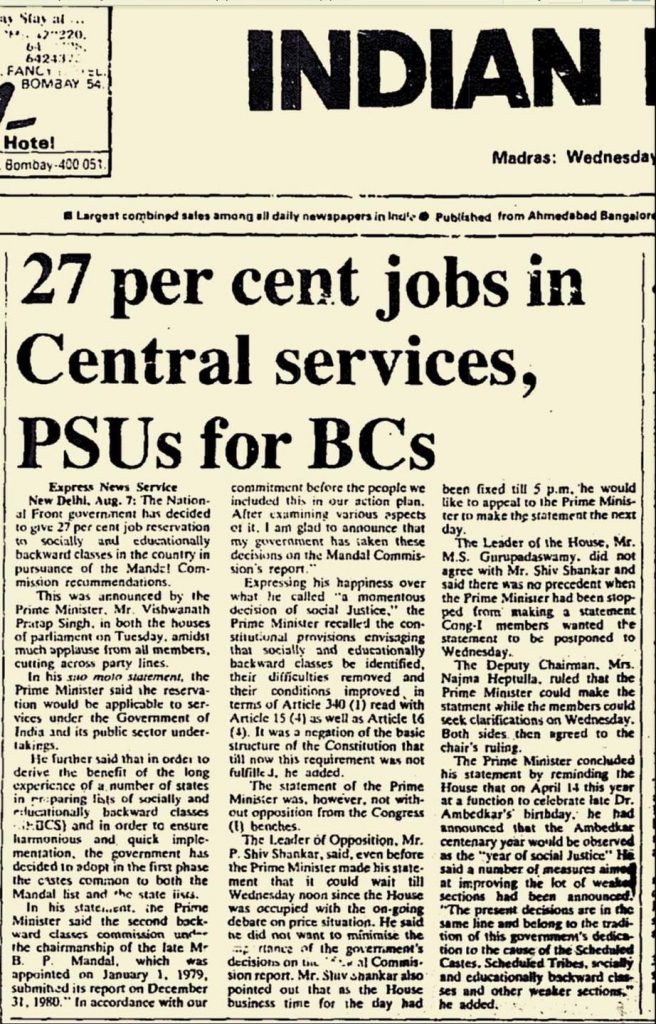
Mona: Okay, but when did OBC reservation actually happen?
Teja: One of the earliest major attempts came in 1953, when the Kaka Kalelkar Commission was established under Article 340.
The Commission prepared a list in which a very large share of the population—around 50–60 percent—was identified as belonging to backward classes.
But interestingly, the Commission itself expressed reservations about using caste as the basis of classification. It worried that doing so might deepen caste divisions rather than eliminate them.
Mona: So then came the famous Mandal Commission?
Teja: Exactly.
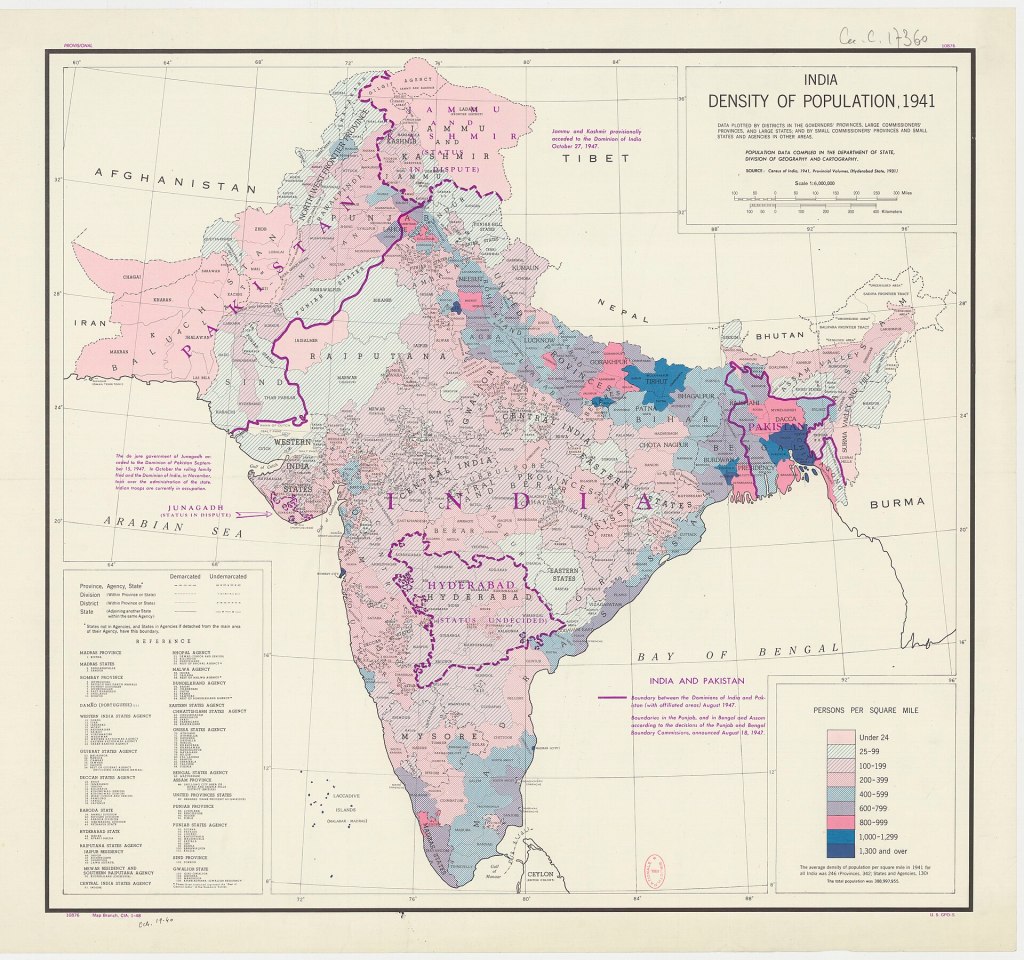
The Mandal Commission was established in 1979. It estimated that around 52 percent of India’s population was socially and educationally backward and recommended 27 percent reservation for OBCs.
Mona: Why exactly 27 percent?
Teja: One of the reasons was to keep the overall reservation within the generally discussed 50 percent ceiling.
Mona: So OBC reservation started in 1979?
Teja: No, not quite! This is where things get interesting.
The Mandal Commission submitted its report in 1980, but the recommendations were implemented much later. In 1990, the V.P. Singh government implemented the recommendation through an Office Memorandum.
It was highly political, and the implementation happened amid intense public debate and protests. Many students strongly opposed it, and widespread protests followed.
Then came the landmark Indra Sawhney case in 1992.
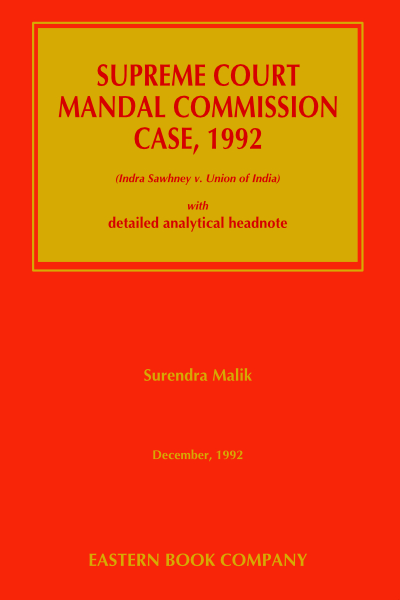
A nine-judge Supreme Court bench upheld the 27 percent OBC reservation, while also developing the framework around the 50 percent ceiling and the creamy layer principle.
OBC reservation was later extended to educational institutions in 2006.
Mona: And after that?
Teja: After that, different caste groups increasingly began demanding inclusion in the OBC category.
Mona: Ah! That’s why you called it the modern avatar of caste.
Teja: Exactly. Reservation became not only a social policy but also a major arena for caste-based political mobilization.
And then came EWS
Mona: Then where does EWS come into this story? Why did that come much later?
Teja: There was actually an attempt during the P.V. Narasimha Rao government to introduce economic criteria, but it couldn’t take shape in the same way because a constitutional amendment was required. The Supreme Court had also earlier held that economic criteria alone could not be used as the basis for reservation.
Meanwhile, as OBC reservation expanded, several communities—including Marathas, Jaats and Kapus—also began demanding OBC status.
I won’t get into the politics behind those demands now. But the interesting irony is that these communities were not historically subjected to the same kind of social discrimination associated with the communities we discussed earlier. In some cases, their leaders had even historically emphasized caste pride.
Mona: So communities that once emphasized their caste identity are now demanding recognition as backward classes?
Teja: Exactly. Politics has a strange sense of humor.
Mona: Maybe some of those leaders aren’t resting in peace after all!
Teja: Haha! Anyway, to address these newer demands, the Constitution was amended in 2019 to introduce a 10 percent EWS quota.
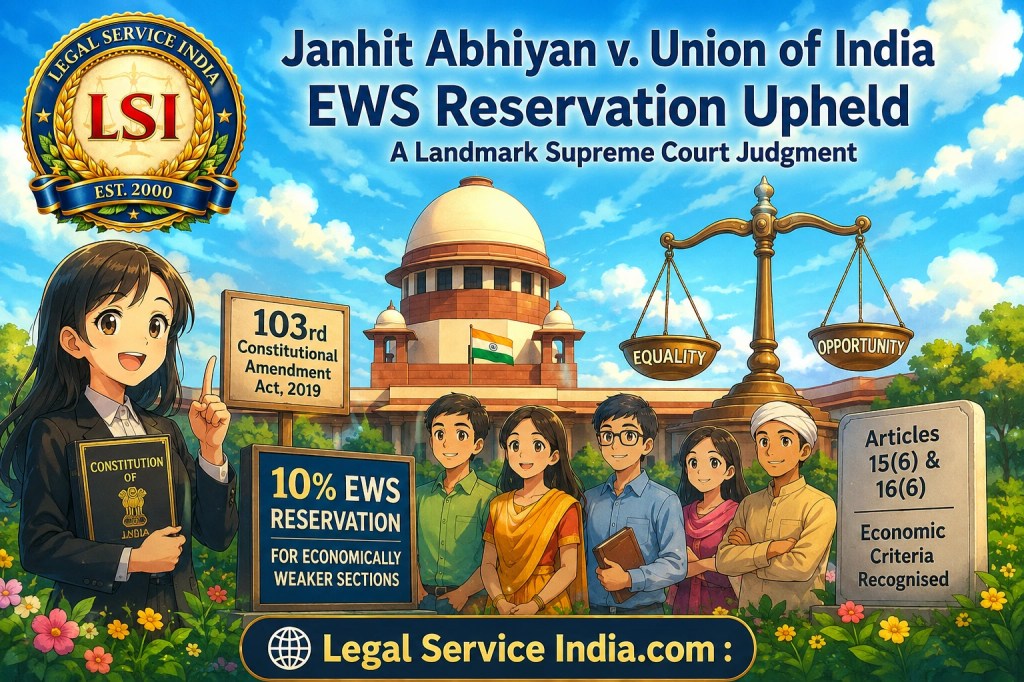
And yes, it was also passed very quickly in Parliament, just before the election.
I’m not getting into the politics and legal debates surrounding EWS right now.
“Now I know everything!”
Mona: Okay, now I finally have a clear picture! I’m ready to give speeches about reservations all over the world!
Teja: Hold on! This is only a basic overview.
You need to understand both the arguments for and against reservation, with proper evidence. You also need to know the major debates surrounding it.
With recent issues like the UGC controversy and the NEET paper-leak controversy, several questions around merit, access, representation and affirmative action have resurfaced.
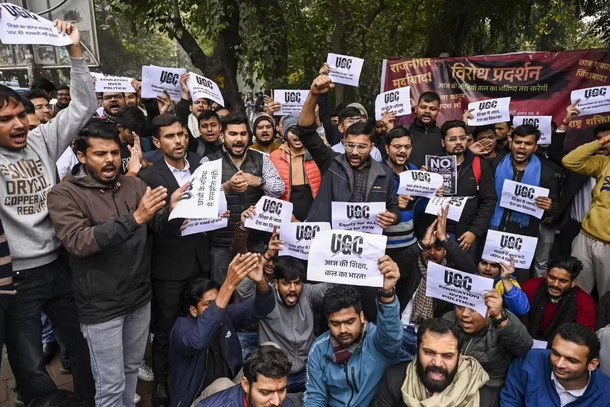
And most importantly, you need to understand these debates from the perspectives of different communities.
Mona: I thought I understood quite a lot!
You never miss a chance to make me feel dumb. You just said you gave me a brief—and now I’m realizing I don’t even know the brief properly!
Okay, I’m getting some coffee.
Let’s discuss this properly.
Teja: Let’s look at some of the major debates surrounding meritocracy and reservation. Interestingly, some writers have used the Pandavas as an analogy for those opposing reservation and the Kauravas for those supporting it. But it’s not really about the analogy—we need to understand the different dimensions of the debate. Come on, let’s get into it!

 The Critilizers
Leave a comment